ACT
ACT is a national college admission exam that includes subject level tests in English, math, reading, and science. Students receive scores that range from 1 to 36 and an overall composite score.
For this review of achievement gaps based on ACT scores, OREA relied on the profile reports produced annually by ACT for Tennessee. There are differences between average scores reported by ACT and those reported by the Tennessee Department of Education on the State Report Card due to two factors: (1) the ACT analysis uses the most recent scores students attain on the ACT (which students are permitted to take more than once) rather than the highest scores, as Tennessee began using in 2016; and (2) the ACT Profile Report includes all students in Tennessee who have taken the ACT, including students in private schools, while the TDOE reports only on public school students. Regardless of these differences, OREA believes that the ACT Profile Report, which has been produced for Tennessee annually for many years using the same methodology, provides the most consistent means of looking at the achievement gaps related to ACT results.
Tennessee’s requirements for students to take the ACT assessment began with state legislation in 2008. A decade later, beginning with the graduating class of 2018, students enrolled in Tennessee public schools during their 11th grade year must complete the ACT as a requirement to graduate. Following are some of the highlights of changes made to Tennessee’s use of the ACT over the years.
- A 2008 state law required Tennessee students in grade 11 to take the ACT or the SAT to assess “student readiness for postsecondary education.” Prior to that, students had the opportunity to take one of these tests but were not required to do so. (Most students in Tennessee take the ACT rather than the SAT.)
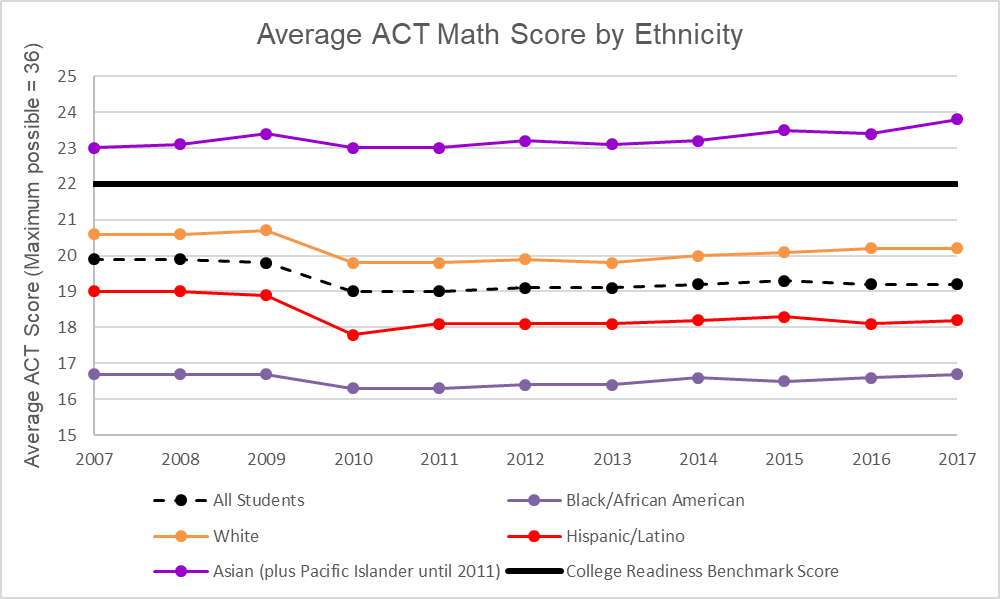
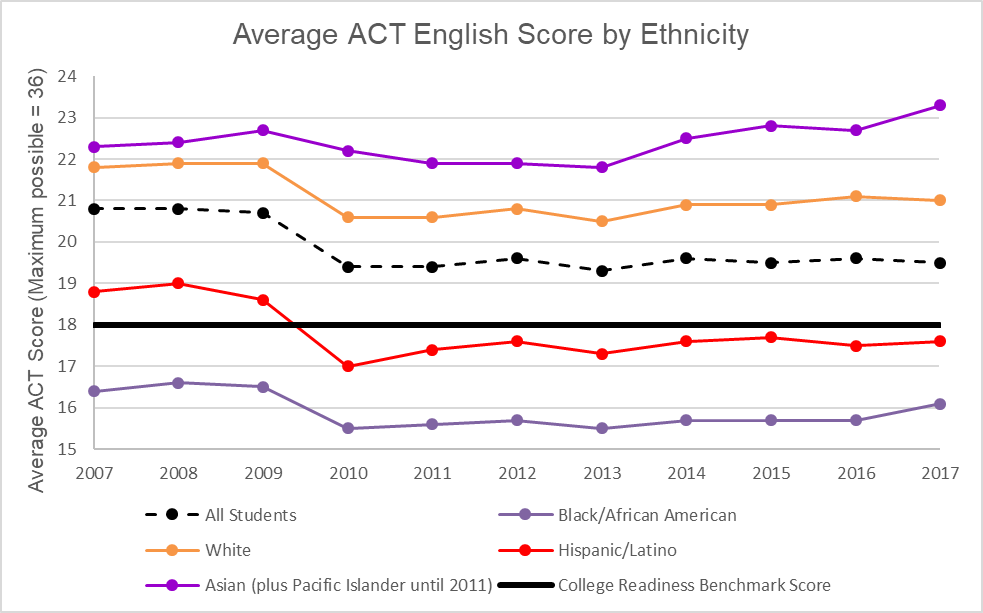
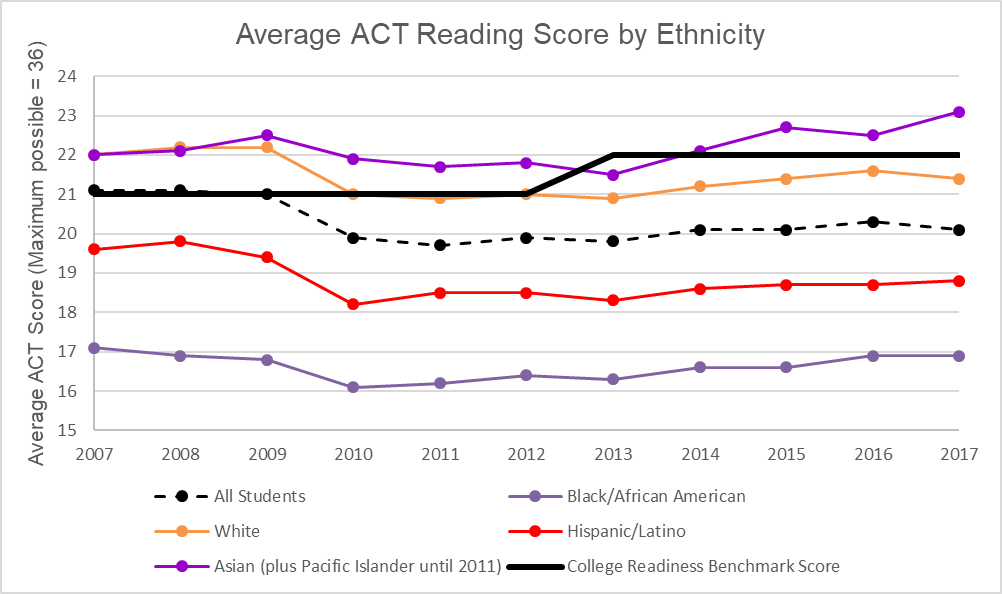
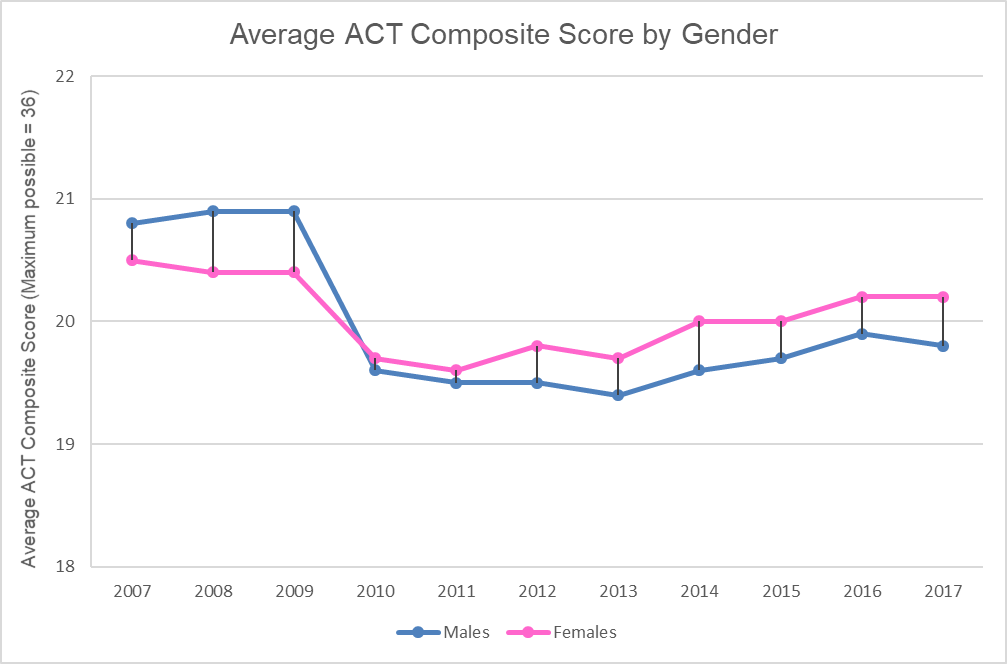
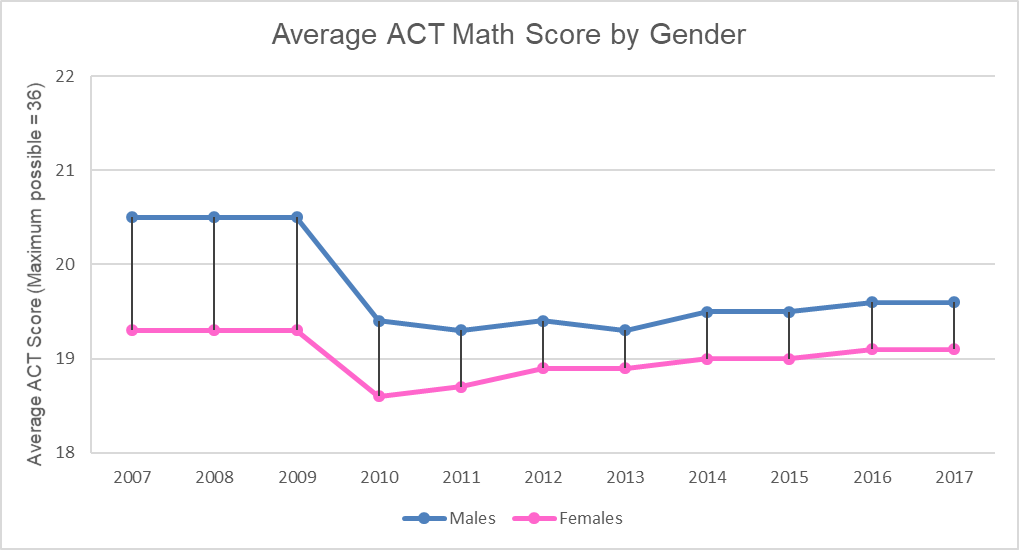
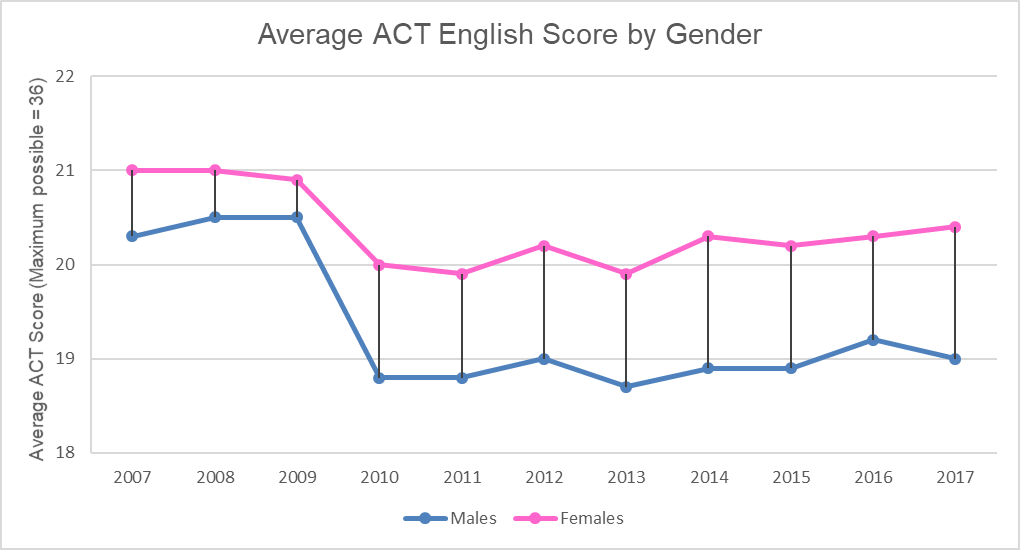
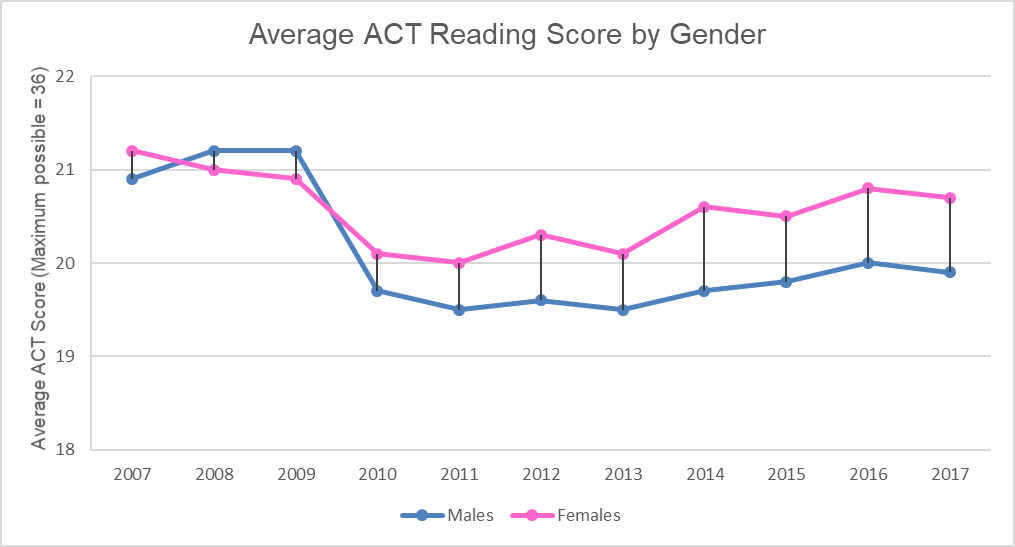
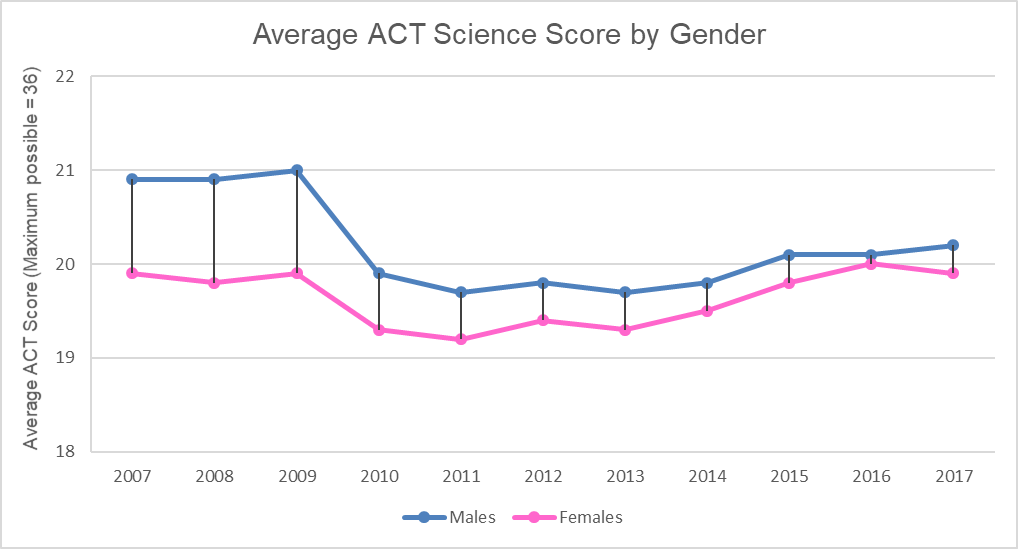
- In 2010, the number of students taking the ACT in Tennessee increased significantly and the average scores decreased for both the composite and subject area tests.
- In 2016, the General Assembly passed legislation allowing any student who took the ACT as a junior to retake the test as a senior free of charge. In fall 2016, nearly 26,000 seniors retook the test and nearly 40 percent of them increased their scores.
- Also beginning in 2016, the Tennessee Department of Education began reporting ACT results on the State Report Card using the highest ACT score per student, meaning that if a student took the ACT multiple times, the highest score received is the one reported. Prior to 2016, TDOE reported the most recent score.
- In 2017, TDOE announced a new accountability measure called the Ready Graduate Indicator, which would use a student’s ACT score of at least 21 as one of four indicators that the student is prepared for postsecondary education and the workforce or the military.1
- Beginning with the graduating class of 2018, completion of the ACT is a graduation requirement for students enrolled in Tennessee public schools during their 11th grade year.
The charts below show the ACT Average composite and subject area scores by ethnicity and gender from 2007 through 20017. All are compiled using data from the annual ACT Profile Reports for Tennessee.


1Tennessee Department of Education, “Tennessee Public School Students Set New Record with ACT Average Score of 20.1,” Oct. 20, 2017,https://www.tn.gov/education/news/2017/10/10/tennessee-public-school-students-set-new-record-with-act-average-score-of-20-1-.html (accessed Feb. 28,2018).